
Blog · Case study · Barcelona
Sound and lighting for a festival in Barcelona: the CODART stage
Six festival days, one act after another, and about two vehicles of equipment that came from Alicante for the sound and lighting of the whole stage.
From 25 to 30 September, Barcelona hosted the CODART International Talent Contests and Festivals, and our team supplied the sound and lighting for a festival stage that ran for six days. Here is what a festival like this asks of the technical side, what we brought, and why the kit travelled to Barcelona from our base in Alicante.
What is the CODART festival?
CODART runs talent contests and festivals in several European cities, and this autumn it moved to Barcelona after Prague. The format is the usual one: performers enter different categories, from vocals to instrumental music, a jury scores every act, and winners are announced at the end.
For the audience an act is a few minutes on stage. For the technical team it is a conveyor belt: one act after another, different genres, different ages, different sound requirements. In a single day the stage can see a solo singer with a backing track and an instrumentalist with a live instrument, and each needs sound and light set up their own way.
Sound and lighting for a festival: what we brought
We supplied the whole sound and lighting side of the stage. The equipment travelled from Alicante, more than 500 kilometres by road, and filled about two vehicles. For comparison, one van is enough for an evening in a pub. A multi-day contest in a large hall is a different scale.
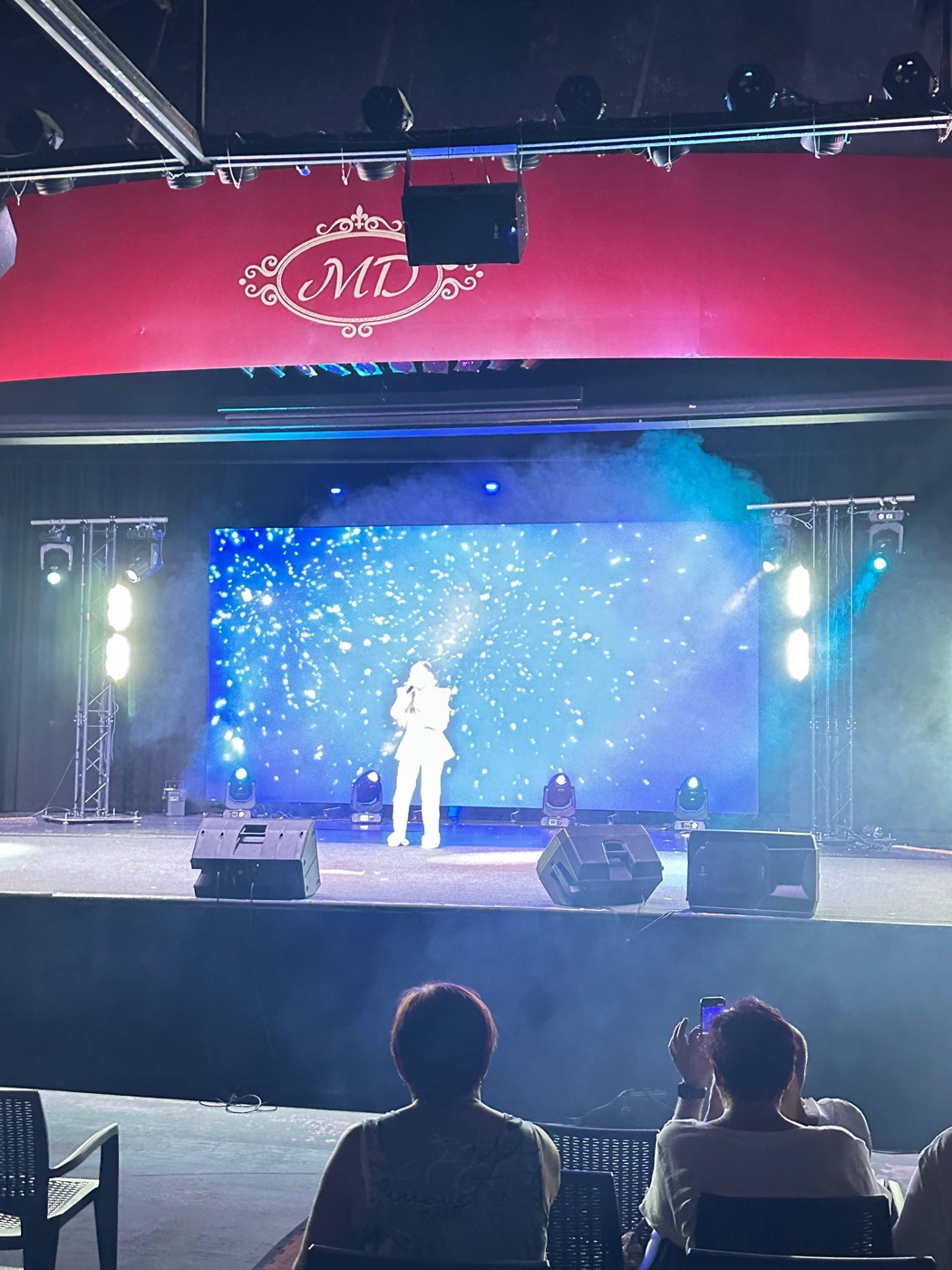
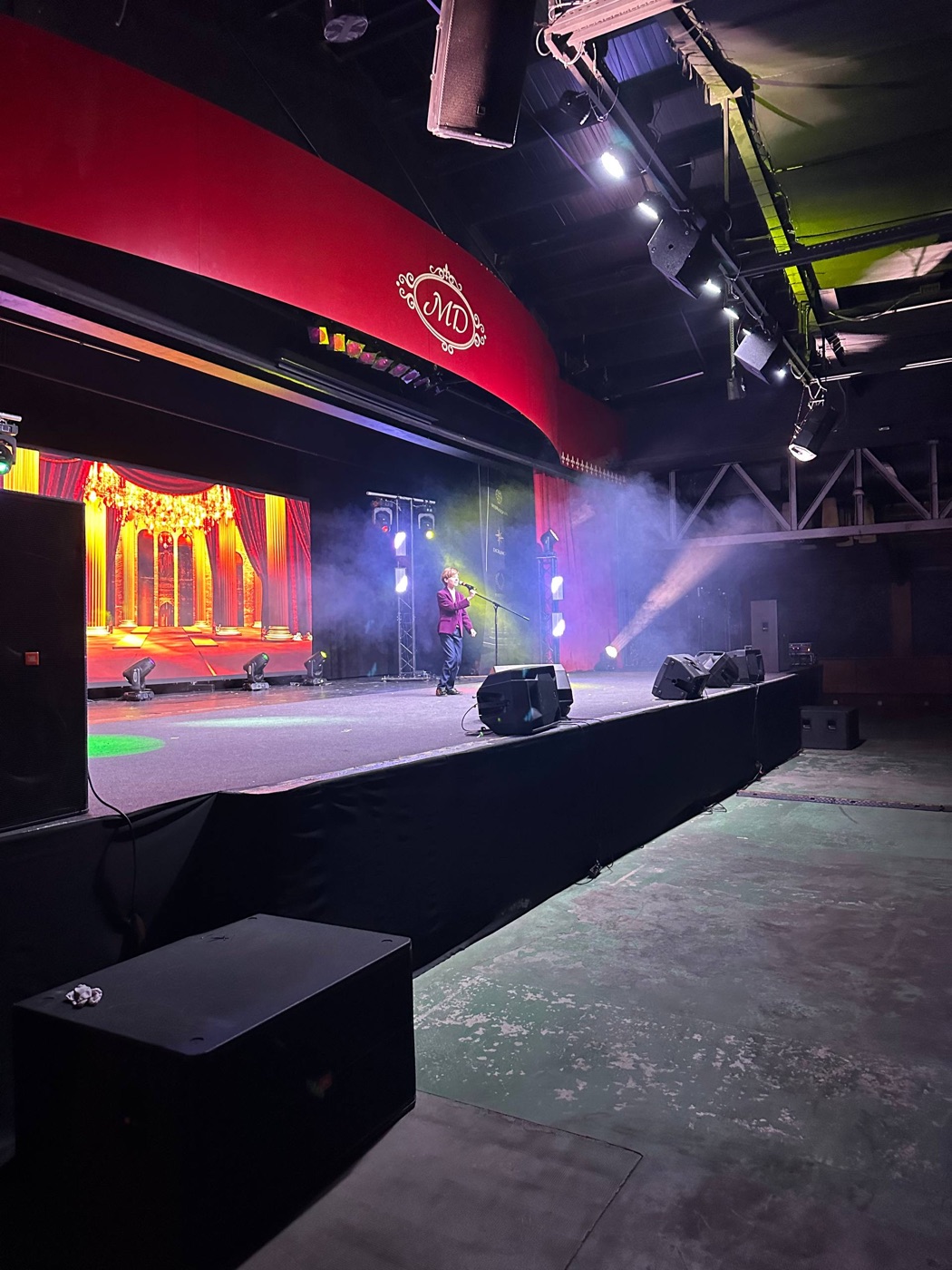
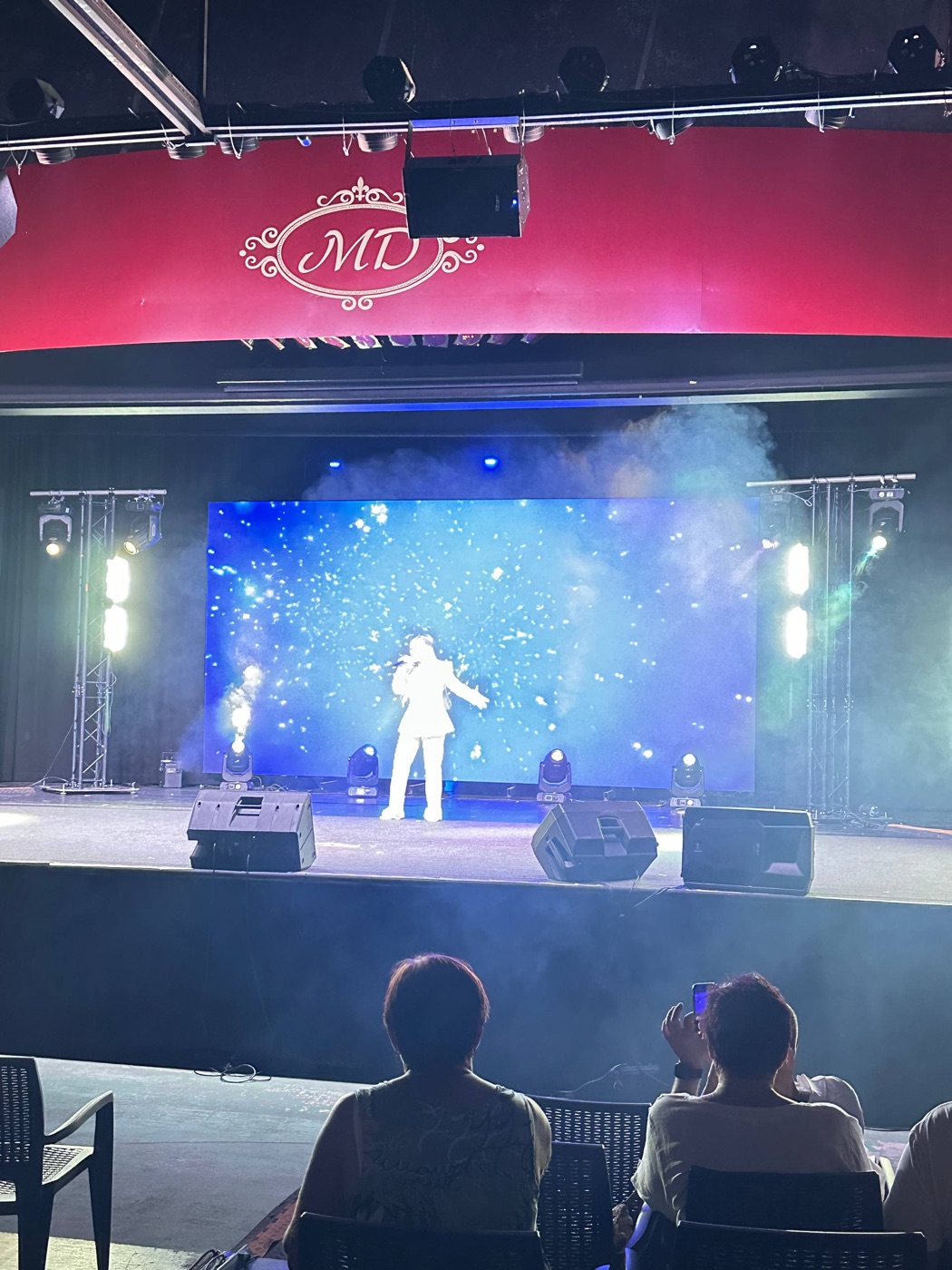
The photos show what the stage was made of:
- Speakers and subwoofers at the sides of the stage, so the music reaches the jury and the back rows evenly;
- Stage monitors along the front edge, because a singer who cannot hear the backing track drifts off pitch even with a good ear;
- Wireless microphones, so nobody drags cables across the stage between acts;
- Two lighting trusses with moving heads and wash lights;
- Moving heads on the floor along the back edge, whose beams through haze give the usual concert look;
- A smoke machine, since without it the beams simply cannot be seen.
Why a contest is harder than a concert
At a concert the band walks on once, the sound is set at the soundcheck, and the engineer then just runs the evening. At a contest the soundcheck effectively happens before every act. Performers change every few minutes and each has different needs: one backing track is quieter, another voice is stronger, a third person plays a live instrument.
The main job is equal conditions for everyone. The jury judges the performance, not the equipment. If one entrant has a louder backing track and another a drier microphone, the score starts to depend on something other than talent. So the engineer keeps every act level: voice above the music, no overload, no drops in volume between tracks.

Backing tracks: where an act most often breaks
Most vocal acts use a backing track. Entrants bring it themselves, on a memory stick, on a phone or as a link in a messenger. This is where problems appear that have nothing to do with talent: the wrong file format, a track with silence at the start, two versions of one song in different keys, a track recorded far quieter than the others.
So we collect the tracks in advance and line them up in running order. Each one is checked before the programme starts: does it open, is there silence at the beginning, does the volume match the rest. When the entrant walks on, the track is already first in the queue, and the engineer only presses one button when the performer is ready, rather than hunting for a file on a parent’s phone. We also keep a fallback, so that if something fails mid-act nobody in the hall hears silence.
Live instruments: harp, piano, violin
Among the videos CODART published during the festival days were acts on harp and piano. A live instrument on a big stage is a different task from a vocal over a backing track. A harp sounds quiet and soft, and without amplification in a large hall the back rows will not hear it. A piano is loud by itself but sounds dull and distant in a big room without microphones.
These acts get their own microphones, and the change has to be quick: stands and cables are prepared beforehand and wait at the side of the stage. The rule is not to spoil the instrument’s own sound, because the jury is judging technique and must hear what the performer actually plays.
Lighting: a picture for the jury, the audience and the cameras
At a contest the lighting serves three audiences at once. The jury must see the performer’s face and movements clearly. The audience in the hall wants a show. And parents and teachers film every act on their phones, and those videos then spread across social media, so the picture has to look good on camera too.
Trusses at the sides give wash light on the performer, with the face visible and the shadows soft. Moving heads handle the effects, and smoke makes the beams visible. A lyrical act gets a calmer lighting scene, an energetic one something more dynamic.

Setting up in a hall that already has its own system
The hall had its own ceiling-hung speakers, which you can see under the roof in the photos. That is common: many large halls, hotels and cultural centres have a basic system meant for background music, speeches and a disco. For a contest with live acts, backing tracks and dancing it is usually not enough. You need monitors for the performers, a separate desk for the programme, wireless systems and stage lighting that the hall simply does not have.
So we add to the venue’s equipment rather than replace it. Before leaving we ask the organiser for photos of the stage and hall, dimensions, seat count and a list of what is already there, which is enough to build a kit with nothing extra and nothing missing. On site everything goes up before the programme starts.
Why the equipment travels hundreds of kilometres
Our base is Alicante and most of our work is along the Costa Blanca. But we regularly run events like this far from base: Barcelona, Madrid, Valencia, Catalonia and the south of France. For an organiser the logic is simple: one team that knows its own equipment, instead of a local rental where the kit may not match the list and the person at the desk is seeing that desk for the first time.
Hiring sound and lighting for festivals and contests
The same set is available through our sound and lighting hire for contests, festivals, concerts, school and dance showcases, presentations and corporate events. You can take:
- Speakers and subwoofers for a hall or an open-air site;
- Stage monitors for the performers;
- Wireless microphones and a mixing desk;
- Lighting: trusses, moving heads, wash lights and smoke, also available as lighting hire on its own;
- A stage and an LED screen if the hall has none.
What we need from the organiser
- The city, hall and dates, meaning how many days the programme runs;
- Photos of the stage and hall and the approximate audience size;
- What the hall already has: sound, lighting, screen, desk;
- The act format: vocals with backing tracks, live instruments, choreography;
- Whether the presenter needs a separate microphone and whether there will be a stream or filming.
Musicians as well as equipment
Our main work is live music: the cover bands Royal Band and Rock Beat, and soloists for weddings, birthdays and corporate events. If your event needs a gala evening beside the contest programme, the band and the kit arrive from a single contractor. More cases: the Finestrat concert and the wedding near Girona.
Frequently asked questions
Do you work at festivals and contests outside Alicante?
Yes. Our base is in Alicante, but we go all over Spain and into the south of France. CODART in Barcelona was one such trip, with about two vehicles of equipment from Alicante.
What did you do at the CODART festival?
We handled sound and lighting for the stage: speakers and subwoofers, monitors for the performers, wireless microphones, lighting trusses with moving heads, floor heads and smoke.
Can I hire sound and lighting for a contest without your crew?
Yes, but for a contest with many acts we advise hiring with a sound engineer. The person at the desk decides whether every entrant sounds the same, and the jury judges the performance, not the equipment.
The hall already has its own sound. Will you still bring a kit?
We add to the venue’s equipment for the job. Send photos of the stage and a list of what is there, and we will say what is enough and what must be brought, usually monitors, wireless systems, a desk and stage lighting.
How should backing tracks be prepared for a contest?
Collect all the tracks in advance, in one format and in running order, and give them to the engineer before the programme starts. We check each file for volume and silence at the start, so on stage there is only a button to press.
Can you amplify live instruments such as a harp, a piano or a violin?
Yes. Live instruments get their own microphones, and stands and cables are prepared beforehand so the stage change between acts takes about a minute.
How much do sound and lighting for a festival cost?
It depends on the hall, the number of days and the format of the acts. Send the city, dates, photos of the stage and the approximate audience, and we will send a quote for your event.
Sound and lighting for your event?
Send the city, dates and a few words about the hall, and we will choose a set and come back with a quote.
Instagram @team5_entertainment · team@team5.es